The Illustrated Guide to Local AI

Deck

The Creators

Cards for the people who built the ideas behind AI.

The Creators cover
Alan Turing
Alan Turing Mythic
Person · Base Set
MythicPersonBase Set
Power 10 · Danger 2 · Speed 6 · Difficulty 9

Year

1936

Who they were

English mathematician who defined the abstract computing machine in his 1936 paper and, in his 1950 paper, proposed the test for machine intelligence. During WWII he led codebreaking against the German Enigma cipher at Bletchley Park (1939-1942).

Description

Alan Turing imagined a machine that could solve any problem. He also asked how we know if a machine is smart. His ideas are the roots of the AI you are learning to build.

Analogy

He is like the architect who drew the blueprint for every computer ever made.

Example

In 1936, he wrote a paper that introduced the universal Turing machine.

Flavour

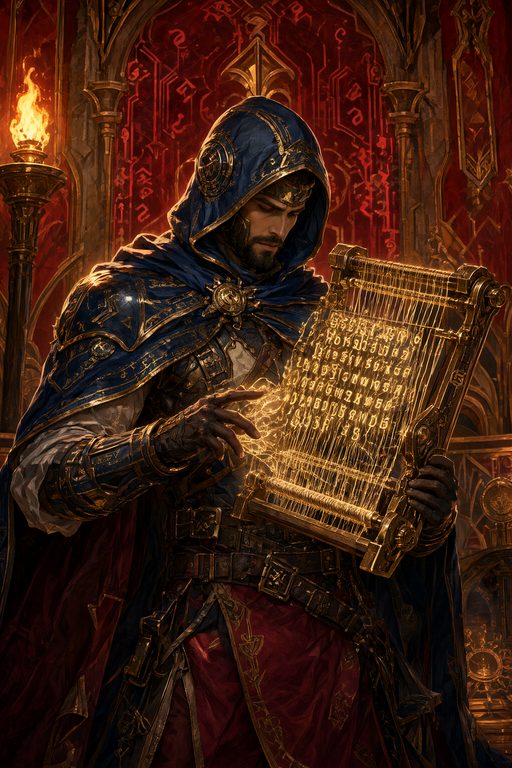
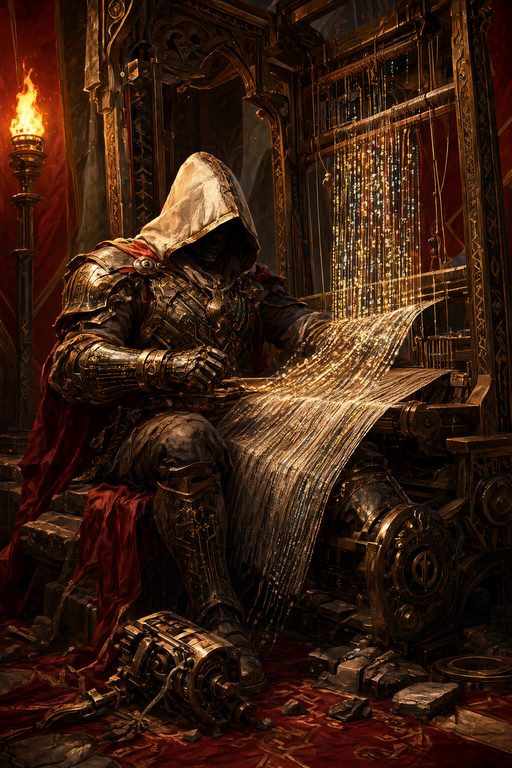
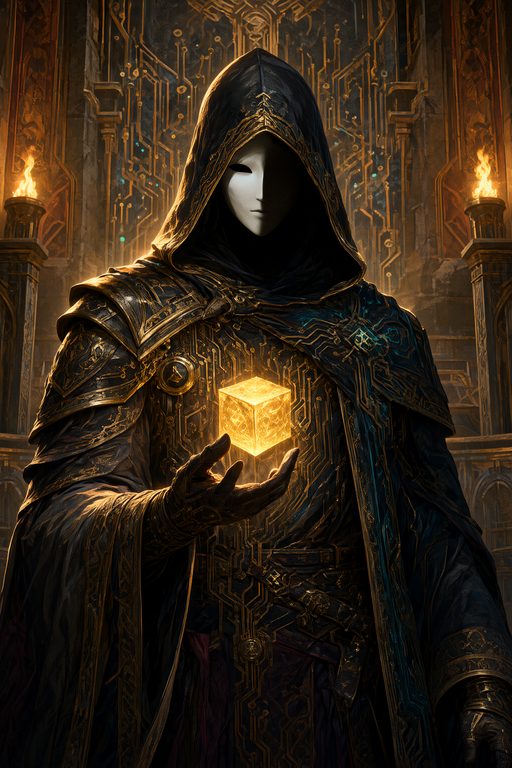
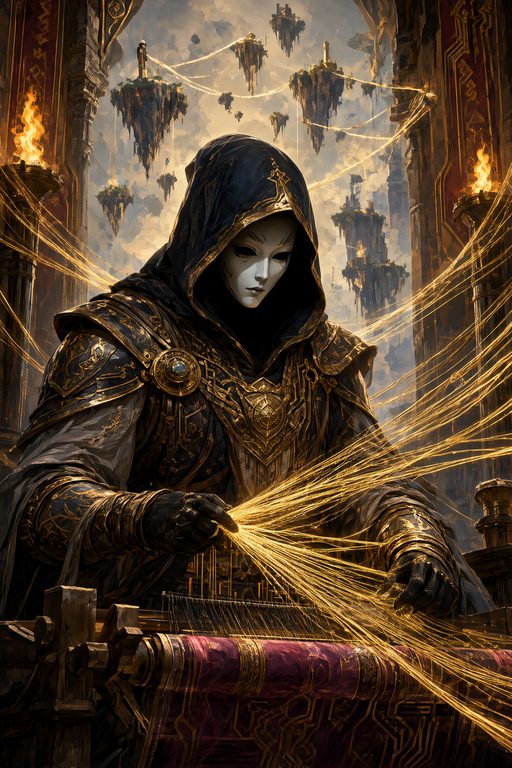
The Weaver of Logic, who spun the first threads of thought into the fabric of the machine.

Origin

Origin: The Question. Once per game, reroll any failed Run. Without this card in your Advisor row, no player may attempt a Run on their very first turn.

Combo

Powers the whole collection

Learn this in chapter 2 →
Claude Shannon
Claude Shannon Mythic
Person · Base Set
MythicPersonBase Set
Power 9 · Danger 1 · Speed 6 · Difficulty 8

Year

1948

Who they were

American mathematician at Bell Labs who established the mathematical foundations of digital communication with his 1948 paper. He is regarded as the father of information theory; the bit as a unit of information comes from his work.

Description

Claude Shannon created the math behind how computers send and receive data. He showed that all information is built from tiny units called bits. This is the base layer for every AI model you run on your computer.

Analogy

It is like discovering that every song, picture, and video is just a long list of on and off switches.

Example

His 1948 paper introduced the bit and channel capacity.

Flavour

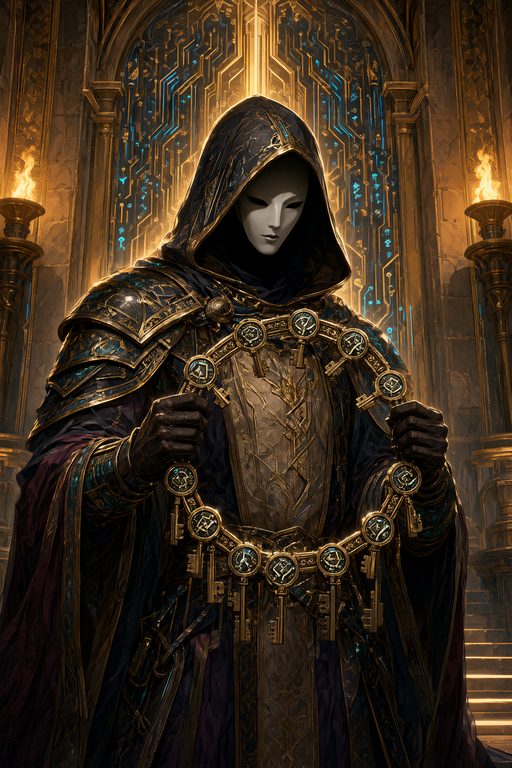
Before the first signal fired, the Sage drew the grid that holds the universe together.

Origin

Origin: The Bit. Once per game, treat any card's Compute cost as 0. (Everything is made of bits without him.)

Combo

None — he is the ground

Learn this in chapter 2 →
John McCarthy
John McCarthy Mythic
Person · Base Set
MythicPersonBase Set
Power 8 · Danger 1 · Speed 5 · Difficulty 6

Year

1956

Who they were

American computer scientist who organized the 1956 Dartmouth workshop that gave the field its name and designed Lisp, one of the earliest and most influential programming languages for symbolic AI.

Description

He started the field of artificial intelligence in 1956. He also created Lisp, a key language for early AI. This helps you understand where local AI tools come from.

Analogy

He is like the person who built the first map and named the country.

Example

The term 'artificial intelligence' first appeared in his 1956 proposal.

Flavour

The Architect who forged the first key to the hidden door of thought.

Origin

Origin: The Name. Once per game, a Run check uses your Python cards' Difficulty as 1.

Combo

None

Learn this in chapter 12 →
Linus Torvalds
Linus Torvalds Mythic
Person · Base Set
MythicPersonBase Set
Power 10 · Danger 2 · Speed 8 · Difficulty 4

Year

1991

Who they were

Finnish-American software engineer and the creator and lead maintainer of the Linux kernel, which he began in 1991. He later created Git, the distributed version control system now used by most open-source projects.

Description

Linus built the Linux kernel, the core software that lets your computer run programs. He also created Git, a tool that helps many people work on the same code together without making a mess.

Analogy

He is like the master builder who lays the foundation for a giant house and hands out the blueprints so others can add rooms.

Example

He announced the Linux kernel in August 1991 and later created Git in 2005 to manage its source code.

Flavour

The Keeper of the Vault holds the only key that opens the gates of the digital realm.

Origin

Origin: The Kernel. Your Linux cards cost -1 Compute (minimum 0). While he is NOT in your Advisor row, ALL Linux cards cost +2 Compute.

Combo

Every Linux Commands card

Learn this in chapter 12 →
Dennis Ritchie
Dennis Ritchie Mythic
Person · Base Set
MythicPersonBase Set
Power 10 · Danger 2 · Speed 6 · Difficulty 5

Year

1969

Who they were

American computer scientist at Bell Labs who, with Ken Thompson, designed Unix and developed the C language in which it was rewritten. C became the foundation for much of modern systems software.

Description

Dennis Ritchie built the C language and helped design Unix. These tools are the base layer for your computer. They make running local AI and Linux easier.

Analogy

It is like laying the concrete foundation before you build the house.

Example

He wrote the book 'The C Programming Language' with Kernighan in 1978.

Flavour

The first spark that forged the iron bones of the digital world.

Origin

Origin: The Foundation. Your Python and Linux cards cost -1 Talent. (C is under everything, so everything gets a little cheaper.)

Combo

Combo: Ken Thompson (the Unix pair gain +1 to their effects while both are in play)

Learn this in chapter 12 →
Ken Thompson
Ken Thompson Mythic
Person · Base Set
MythicPersonBase Set
Power 9 · Danger 2 · Speed 7 · Difficulty 5

Year

1969

Who they were

American computer scientist at Bell Labs who, with Dennis Ritchie, invented Unix. Later at Google he helped create Go and, with Rob Pike, did key early work on the UTF-8 encoding.

Description

Ken Thompson built Unix, a system that runs on many computers. It helps your local AI manage files and tasks. He also helped make text encoding better for everyone.

Analogy

It is like building a sturdy house frame that lets you add any room you want later.

Example

In 1969, he co-created Unix, which is still used today.

Flavour

The master smith who forged the iron bones of the digital realm.

Origin

Origin: The Pair. While Dennis Ritchie is also in play, both gain +1 to their effects. Additionally: your model's Context Window counts +1 (UTF-8: text finally fits).

Combo

Dennis Ritchie

Learn this in chapter 12 →
Geoffrey Hinton
Geoffrey Hinton Mythic
Person · Base Set
MythicPersonBase Set
Power 10 · Danger 3 · Speed 6 · Difficulty 7

Year

1986

Who they were

British-Canadian computer scientist and a leader of deep learning. With David Rumelhart and Ronald Williams he popularized the backpropagation training algorithm (1986), and his group's AlexNet won the 2012 ImageNet competition. Shared the 2024 Nobel Prize in Physics.

Description

Geoffrey Hinton helped create a way for computers to learn from their mistakes. He led the team that built AlexNet, a system that could recognize images in 2012. His work won the 2024 Nobel Prize in Physics.

Analogy

It is like a student checking their test, seeing where they went wrong, and fixing their method so they get better next time.

Example

In 1986, he and his team published a paper explaining how to teach computers by sending error signals backward.

Flavour

The Keeper of the Labyrinth guides the light back through the dark paths to reveal the truth.

Origin

Origin: The Signal. Your Model's Power counts +2.

Combo

Combo: Yoshua Bengio (while both in play, your Model's Power gets +1 extra)

Learn this in chapter 2 →
Guido van Rossum
Guido van Rossum Mythic
Person · Base Set
MythicPersonBase Set
Power 9 · Danger 1 · Speed 7 · Difficulty 2

Year

1991

Who they were

Dutch programmer who began designing Python at CWI in the Netherlands in December 1989 as a successor to the ABC language, and released the first public version (0.9.0) in February 1991. Python is now one of the most popular languages, especially for AI work.

Description

Guido van Rossum built Python, a programming language that started in 1991. It is now a top tool for teaching computers to think like us.

Analogy

Python is like a recipe book that uses simple English words instead of complicated math symbols.

Example

The first public version of Python, called 0.9.0, was released in 1991.

Flavour

The Sage of the Snake weaves code so smooth it feels like breathing.

Origin

Origin: The Grammar. Your Python cards count +1 Power on Run checks.

Combo

Every Python card

Learn this in chapter 12 →
Andrej Karpathy
Andrej Karpathy Mythic
Person · Base Set
MythicPersonBase Set
Power 9 · Danger 1 · Speed 7 · Difficulty 3

Year

2014

Who they were

Slovak-Canadian AI researcher, co-founder of OpenAI (2015) and former Tesla Director of AI and Autopilot Vision (2017-2022). Known for the open-source Caffe library (2014), nanoGPT (2022) and widely used educational explanations of how neural networks work.

Description

He built Caffe, a tool that helps computers learn from pictures. He also made nanoGPT, a simple way to build AI. His clear explanations help you understand how neural networks work on your own computer.

Analogy

He is like a master chef who shows you exactly how to cook a complex meal using simple, clear steps.

Example

In 2014, he was the lead developer of Caffe at Stanford.

Flavour

The Sage who turns the magic of machines into simple lessons for all.

Origin

Origin: The Lesson. Your Local AI Concept cards count +1 Power.

Combo

Every Local AI Concept card

Learn this in chapter 2 →
Richard Stallman
Richard Stallman Rare
Person · Base Set
RarePersonBase Set
Power 7 · Danger 1 · Speed 4 · Difficulty 4

Year

1983

Who they were

American software activist and hacker who started the GNU project in 1983 to build a free Unix-compatible system and founded the Free Software Foundation in 1985. He coined the term 'free software' and authored the GPL license.

Description

He started the GNU project in 1983 to build a free system. He believes code should be open for everyone to see and change. This helps you learn how software really works.

Analogy

It is like sharing the recipe for a cake so anyone can bake it and add their own ingredients.

Example

He announced the GNU project in 1983 to create a free operating system.

Flavour

The keeper of the open gate guards the source code from those who wish to lock it away.

Origin

Once per game, treat a Closed Company or Closed model card as Open for one Run.

Combo

Open-weights cards

Learn this in chapter 12 →
Brian Kernighan
Brian Kernighan Rare
Person · Base Set
RarePersonBase Set
Power 7 · Danger 1 · Speed 6 · Difficulty 4

Year

1977

Who they were

American-Canadian computer scientist at Bell Labs, a key figure in Unix development. He co-wrote 'The C Programming Language' with Dennis Ritchie (1978) and created the AWK programming language (1977).

Description

He helped build the tools that let computers talk to each other. He created a simple language for sorting text, which is still used today. This helps you understand how data is processed before an AI sees it.

Analogy

He is like a librarian who invented a special shorthand to organize books faster.

Example

In 1977, he created the AWK programming language to help people find specific words in long lists of text.

Flavour

The scribe who carved the first rules of order into the digital stone.

Origin

While Dennis Ritchie is in play, your first Tool card each turn costs 1 less Talent.

Combo

Dennis Ritchie

Learn this in chapter 12 →
Grace Hopper
Grace Hopper Rare
Person · Base Set
RarePersonBase Set
Power 7 · Danger 1 · Speed 5 · Difficulty 4

Year

1952

Who they were

American computer scientist and US Navy rear admiral, a pioneer of machine-independent programming. She developed the FLOW-MATIC language and her A-0 system (completed 1951-52) is widely described as one of the first compilers; she was instrumental in creating COBOL on the 1959 standards committee.

Description

Grace Hopper built tools that let people write instructions in plain words instead of confusing machine codes. Her work created the first compilers, which translate human-like code into computer language. This is why modern languages like Python can be easy to learn.

Analogy

It is like having a universal translator that turns your everyday speech into a secret code the machine understands.

Example

Her A-0 system, finished in 1952, is widely described as one of the first compilers.

Flavour

The Admiral weaves raw numbers into neat rows of words, bridging the gap between human thought and machine logic.

Origin

pip install may target any card in the supply pile, not just Companies and Techniques (compilers open the door).

Combo

pip install (Python)

Learn this in chapter 12 →
Ada Lovelace
Ada Lovelace Rare
Person · Base Set
RarePersonBase Set
Power 7 · Danger 1 · Speed 4 · Difficulty 5

Year

1843

Who they were

English mathematician who wrote extensive notes on Charles Babbage's Analytical Engine. Her Note G (1843) is the first published algorithm intended to be carried out by a machine; she was the first to recognize the machine could manipulate symbols beyond pure numbers.

Description

Ada Lovelace wrote the first steps for a machine to follow. She showed that computers can handle symbols, not just numbers. This helps you understand how local AI processes data.

Analogy

It is like writing a recipe for a robot chef that can cook any dish, not just one specific meal.

Example

In 1843, she published Note G, which is the first published algorithm for a machine.

Flavour

The first mind to see the loom of logic weaving dreams beyond mere counting.

Origin

Your first Python card each turn costs -1 Talent.

Combo

Every Python card

Learn this in chapter 12 →
Tim Berners-Lee
Tim Berners-Lee Rare
Person · Base Set
RarePersonBase Set
Power 8 · Danger 1 · Speed 7 · Difficulty 3

Year

1989

Who they were

British computer scientist who, while at CERN, invented the World Wide Web in 1989-1991, including the first web browser and the URL, HTTP and HTML. He later founded the W3C in 1994 to develop web standards.

Description

Tim Berners-Lee built the World Wide Web, a system for sharing information. He invented the tools that let computers talk to each other. This shows how sharing data helps everyone learn.

Analogy

It is like building a giant library where every book is connected to every other book by invisible threads.

Example

He proposed the web in 1989 and created the first prototype at CERN.

Flavour

The Master Weaver spun the first threads of light to bind the scattered islands of knowledge.

Origin

Once per game, share one card from your Tool row with another player: they may use it on their next turn.

Combo

All players

Learn this in chapter 6 →
Yann LeCun
Yann LeCun Rare
Person · Base Set
RarePersonBase Set
Power 8 · Danger 2 · Speed 7 · Difficulty 6

Year

1998

Who they were

French computer scientist and a leader of deep learning, best known for developing convolutional neural networks including LeNet for handwriting recognition (1998 paper). Shared the 2018 Turing Award with Hinton and Bengio for neural-network machine learning.

Description

Yann LeCun built a special way for computers to see, called convolutional neural networks. This helps machines find patterns in pictures, like reading handwritten numbers. It is a key step in teaching local AI to understand the world.

Analogy

It is like using a tiny magnifying glass to scan a big picture, piece by piece, to find shapes.

Example

In 1998, he created LeNet, a system that could recognize handwritten digits.

Flavour

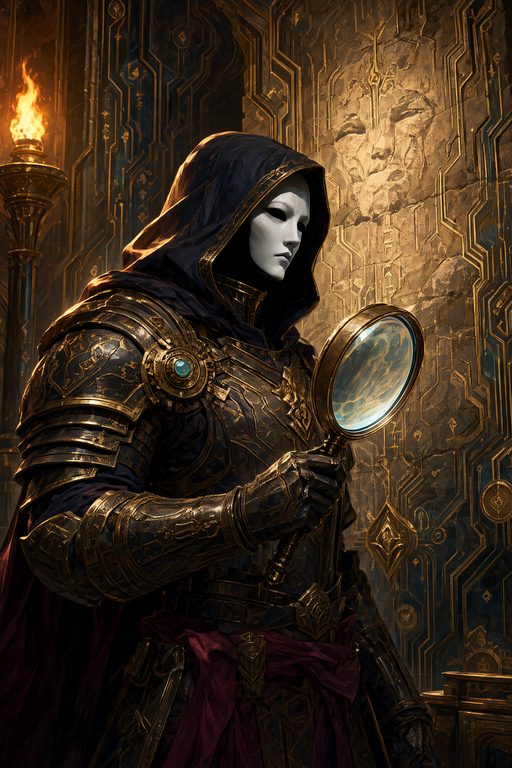
The Lens-Knight scans the ancient stone for hidden faces.

Origin

While in play, your Model's Speed counts +1 (convolutions: fast pattern-finding).

Combo

Model cards

Learn this in chapter 2 →
Yoshua Bengio
Yoshua Bengio Rare
Person · Base Set
RarePersonBase Set
Power 8 · Danger 2 · Speed 6 · Difficulty 7

Year

2014

Who they were

Canadian computer scientist and a leader of deep learning, known for work on sequence-to-sequence models and the attention mechanism (2014-15 paper with Bahdanau and Cho). Shared the 2018 Turing Award with Hinton and LeCun.

Description

Yoshua Bengio helped teach computers to read and translate languages. He found a way for machines to focus on the right words in a sentence. This makes local AI better at understanding context.

Analogy

It is like reading a long paragraph and highlighting the key words so you do not lose track of the meaning.

Example

In 2018, he shared the Turing Award with Geoffrey Hinton and Yann LeCun for their work on deep learning.

Flavour

The Scholar aligns the scattered runes, binding the chaotic noise into a clear and steady voice.

Origin

Combo: While Geoffrey Hinton is in play, your Model's Power counts +1 extra (the Turing pair).

Combo

Geoffrey Hinton

Learn this in chapter 2 →
Georgi Gerganov
Georgi Gerganov Rare
Person · Base Set
RarePersonBase Set
Power 8 · Danger 1 · Speed 8 · Difficulty 4

Year

2023

Who they were

Software engineer who created llama.cpp (started 2023), an open-source C/C++ library for running large language models locally, often without a GPU. He also designed the GGUF model file format used by most local LLM tools.

Description

Georgi Gerganov built llama.cpp, a tool that lets computers run big AI models without needing expensive graphics cards. He also created the GGUF file format, which helps store these models efficiently so they fit on your local machine.

Analogy

It is like packing a giant suitcase into a small backpack so you can take it anywhere, not just leave it at home.

Example

He started the llama.cpp project in March 2023 to make running AI models easier on regular computers.

Flavour

The Forge-Master compresses the weight of the world into gems that fit in the palm of a hand.

Origin

Combo: While Tim Dettmers is in play, every model in play has its VRAM cost reduced by 1.

Combo

Tim Dettmers

Learn this in chapter 3 →
Tri Dao
Tri Dao Rare
Person · Base Set
RarePersonBase Set
Power 8 · Danger 1 · Speed 9 · Difficulty 7

Year

2022

Who they were

Computer scientist at UC Berkeley who developed FlashAttention, a memory-efficient exact attention algorithm (NeurIPS 2022 paper) that significantly speeds up transformer training and inference on GPUs; FlashAttention-2 followed in 2023.

Description

Tri Dao built a method called FlashAttention that helps computers learn faster. It saves memory so your local AI can run smoothly on your own hardware.

Analogy

It is like reading a long book by only looking at the page you need right now, instead of carrying the whole library on your back.

Example

The FlashAttention paper was shared at the NeurIPS conference in 2022.

Flavour

A swift courier who carries the torch of knowledge without leaving a heavy trail of smoke behind.

Origin

While in play, Run checks cost -1 Compute (attention without the memory bill).

Combo

GPU (Hardware)

Learn this in chapter 7 →
Tim Dettmers
Tim Dettmers Rare
Person · Base Set
RarePersonBase Set
Power 8 · Danger 1 · Speed 7 · Difficulty 6

Year

2023

Who they were

Computer scientist who developed the bitsandbytes Python library (2021) for 8-bit and 4-bit quantization of neural networks, and QLoRA (NeurIPS 2023), an efficient method for fine-tuning large language models on a single consumer GPU.

Description

Tim built tools that shrink big AI models so they fit on your home computer. This lets you run and train large models without needing a supercomputer.

Analogy

It is like packing a giant suitcase into a tiny box by folding the clothes very tightly.

Example

In 2023, he showed how to fine-tune a 65B model on one GPU using 4-bit quantization.

Flavour

The alchemist folds the giant gem into a tiny crystal that fits in a single pocket.

Origin

Your model's VRAM cost is reduced by 1 (4-bit). If Georgi Gerganov is in play, the total reduction is 2.

Combo

Georgi Gerganov

Learn this in chapter 3 →
Mark Zuckerberg
Mark Zuckerberg Joker
Person · Base Set
JokerPersonBase Set
Power 1 · Danger 1 · Speed 3 · Difficulty 1

Year

2004

Who they were

American businessman who co-founded Facebook in 2004 as a Harvard student and has served as its CEO. He renamed the company Meta in 2021; its AI division released the open-weight Llama models beginning in 2023.

Description

This person started a social network in 2004. Later, his company released free AI tools called Llama. These tools let you run smart software on your own computer.

Analogy

It is like building a giant town square where everyone shares news, then giving out free blueprints for smart robots.

Example

In 2023, the company released open-weight Llama models that people can use on their own devices.

Flavour

The Jester of the Digital Court jingles with noise but holds no power to build.

Origin

Hype: Every player must pass; nobody may Build this round. (Once per game.)

Combo

None

Learn this in chapter 11 →
Elon Musk
Elon Musk Joker
Person · Base Set
JokerPersonBase Set
Power 2 · Danger 2 · Speed 9 · Difficulty 1

Year

2015

Who they were

American businessman and entrepreneur, CEO of Tesla and SpaceX, and a co-founder of OpenAI in 2015; he later left the OpenAI board. His companies use AI for autonomous driving and manufacturing.

Description

He helped start a group to build smart computers that help people. His cars use this tech to drive themselves. He also built special machines to teach these computers.

Analogy

It is like building a robot that learns to drive by watching videos, just like you learn a game by playing it.

Example

He co-founded OpenAI in 2015 and later left the board.

Flavour

The Jester of Logic breaks big problems into tiny pieces to find the hidden truth.

Origin

First-principles tweet: Look at the top card of the supply; play it now at half cost, or discard it.

Combo

None

Learn this in chapter 11 →
Sam Altman
Sam Altman Joker
Person · Base Set
JokerPersonBase Set
Power 2 · Danger 2 · Speed 6 · Difficulty 1

Year

2023

Who they were

American venture capitalist and entrepreneur who co-founded OpenAI in 2015 and was reinstated as its CEO in November 2023, overseeing the launch and rapid growth of ChatGPT (2022).

Description

Sam Altman helped start OpenAI in 2015. He became the leader again in late 2023. This shows how big ideas need strong leaders to grow.

Analogy

It is like being the captain of a ship that is building a new engine while sailing.

Example

He was brought back to lead OpenAI in November 2023.

Flavour

The court jester holds the kingdom's fate in a single, glowing chip.

Origin

Discard a card from your hand: gain 3 of any one resource.

Combo

None

Learn this in chapter 10 →
Jack Dorsey
Jack Dorsey Joker
Person · Base Set
JokerPersonBase Set
Power 1 · Danger 1 · Speed 2 · Difficulty 1

Year

2006

Who they were

American entrepreneur who co-founded Twitter in 2006 and the payments company Square (now Block) in 2009. His roles are primarily in social media and fintech, with limited direct AI research contribution.

Description

Jack Dorsey helped build the first version of Twitter. He also started Square, a company for sending money. These tools show how software can change how people talk and pay.

Analogy

It is like building a giant town square where everyone can shout to each other, and then building a magic wallet that lets you trade coins instantly.

Example

He co-founded Twitter in 2006 and Square in 2009.

Flavour

The Jester of the Digital Court reshapes the world by swapping one idea for another.

Origin

Rebrand: Swap one card in your hand for a different card in your hand.

Combo

None

Learn this in chapter 11 →
Jeff Bezos
Jeff Bezos Joker
Person · Base Set
JokerPersonBase Set
Power 2 · Danger 1 · Speed 7 · Difficulty 1

Year

1994

Who they were

American businessman who founded Amazon in 1994, growing it from an online bookstore into the world's largest e-commerce and cloud company. Amazon's AWS (2006) is a major AI-training platform and Alexa its AI voice assistant.

Description

He started with just books in 1994. Now his cloud service helps train AI brains. This shows how starting small can lead to big power.

Analogy

It is like building a tiny garden that grows into a forest that feeds the whole world.

Example

In 2006, he launched a cloud service that is now a top place for training AI.

Flavour

The merchant of boxes who turned a single seed into an endless sky of data.

Origin

Day 1, forever: Every card you play this turn costs -1 Power (electricity), with a minimum cost of 0.

Combo

None

Learn this in chapter 11 →
Steve Jobs
Steve Jobs Joker
Person · Base Set
JokerPersonBase Set
Power 2 · Danger 1 · Speed 6 · Difficulty 2

Year

1976

Who they were

American entrepreneur who co-founded Apple in 1976, left, and returned in 1997 to lead the company through the iMac, iPhone and iPad. His contribution was design taste and industrialization, not the underlying AI technology. Apple has kept most of its on-device AI private.

Description

Steve Jobs helped build Apple, a company that makes devices you can hold. He focused on making technology look and feel simple, not on the code inside. For you, this means good design helps you use local AI tools without getting confused.

Analogy

It is like choosing a smooth, easy-to-hold cup instead of a jagged one.

Example

He co-founded Apple in 1976 with Wozniak and Wayne.

Flavour

The master craftsman polishes the surface until the magic is easy to hold.

Origin

Design bonus: One card in play counts +1 to its best stat this turn.

Combo

None

Learn this in chapter 11 →
Bill Gates
Bill Gates Joker
Person · Base Set
JokerPersonBase Set
Power 2 · Danger 2 · Speed 5 · Difficulty 1

Year

1975

Who they were

American businessman who co-founded Microsoft in 1975 with Paul Allen and led it for decades, making Windows and Office the dominant desktop software. He started as a real programmer (early BASIC) and Microsoft is now a major investor in AI.

Description

He helped build the software that runs on most computers. Now, his company helps pay for new AI tools. This shows that old code can still power new magic.

Analogy

It is like building a sturdy house first, then using the spare wood to build a new robot.

Example

He started Microsoft in 1975 with Paul Allen, and now it works with OpenAI.

Flavour

The Jester of Code weaves old windows into new spells of thought.

Origin

After a failed Run, you may rerun the checks once.

Combo

None

Learn this in chapter 11 →

← All decks